Why Infrared
See how thermal imaging helps reveal issues early.
Infrared Thermography and Its Applications
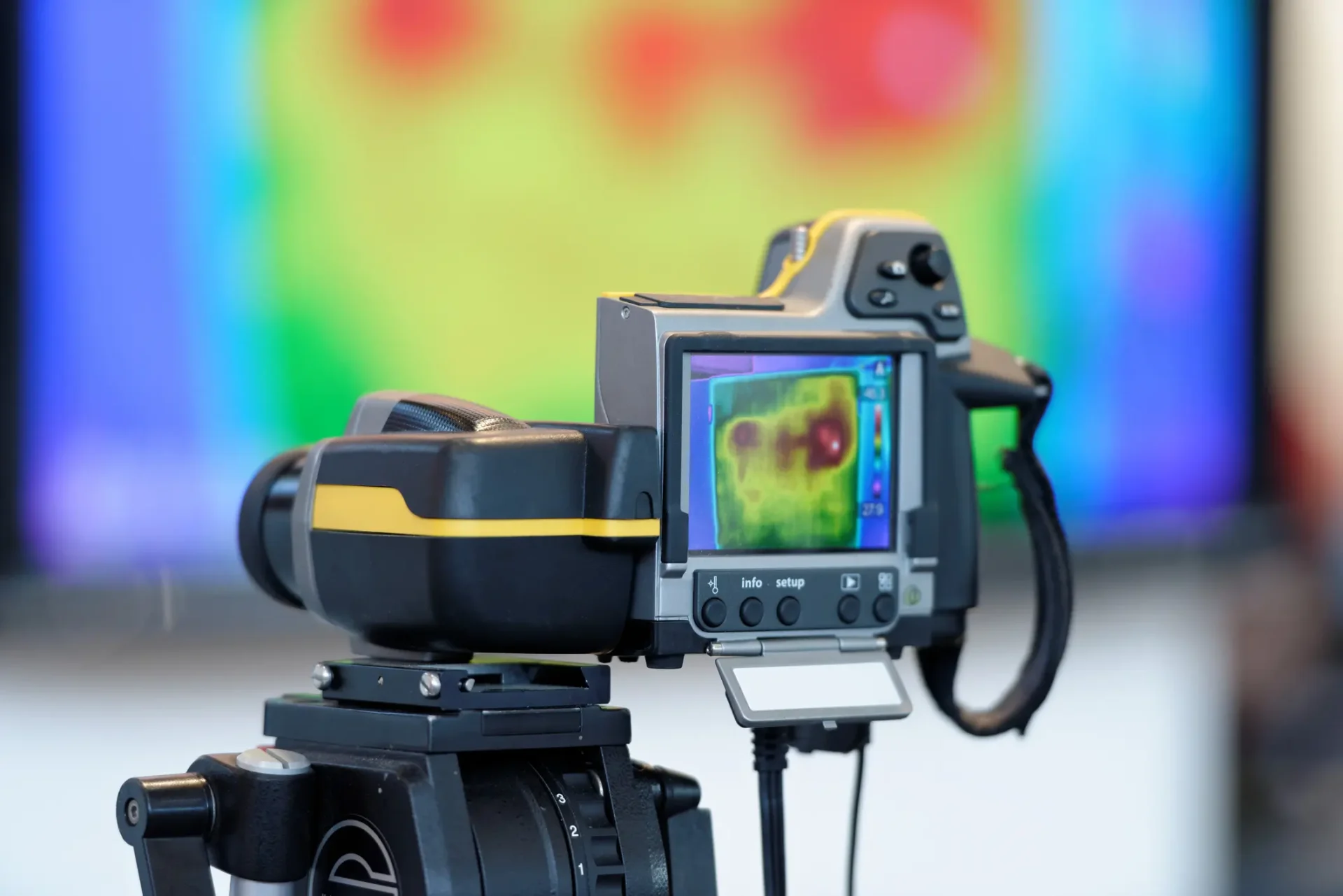
Infrared thermography is a non-contact, non-destructive diagnostic technique that captures and visualizes thermal patterns on the surface of an object by detecting infrared radiation. Since all objects with a temperature above absolute zero emit infrared energy, thermographic cameras can convert this radiation into images that represent temperature variations. These thermal images help identify abnormal conditions that are not visible to the naked eye.
One of the most important applications of infrared thermography is energy loss detection in residential and commercial buildings. Heat loss through poorly insulated walls, roofs, windows, and doors appears as temperature anomalies on thermographic images. By identifying these anomalies, insulation improvements and sealing air leaks can lead to reduced energy consumption and lower operating costs.
Infrared thermography is also widely used for moisture detection. Moisture within building materials changes their thermal behavior because wet areas retain and release heat differently than dry materials. Thermographic surveys can therefore reveal hidden leaks, roof moisture, plumbing failures, and water intrusion behind walls or ceilings without invasive inspection. Early detection of moisture helps prevent structural damage, mold growth, and costly repairs.
In addition, infrared thermography plays a critical role in identifying electrical problems. Electrical faults such as loose connections, overloaded circuits, unbalanced loads, and failing components generate excess heat before failure occurs. Thermographic inspections can detect these hotspots in panels, transformers, breakers, and motors, allowing maintenance teams to address issues proactively. This improves system reliability, reduces downtime, and enhances safety by minimizing the risk of fires or equipment failure.